
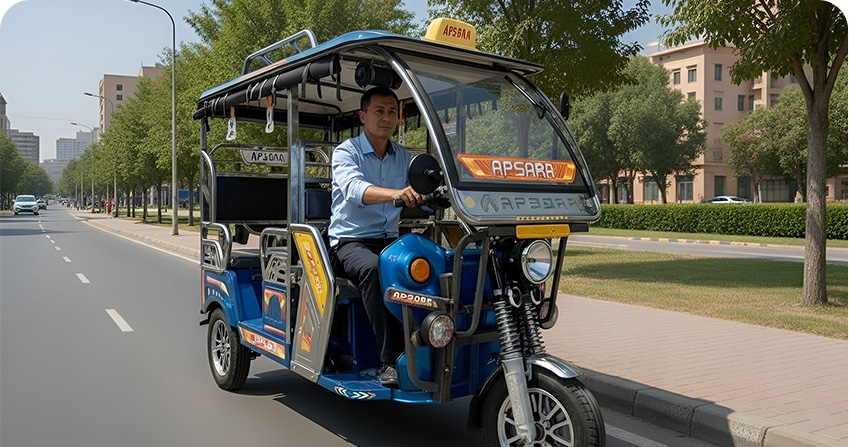
India’s urban and semi-urban transport landscape has undergone a quiet but powerful transformation in the last decade. Among the most visible symbols of this change is the rapid rise of electric rickshaws (e-rickshaws)—a clean, affordable, and efficient mode of last-mile connectivity. As cities struggle with pollution, congestion, and rising fuel costs, e-rickshaws have emerged as a practical and sustainable solution.
What Are E-Rickshaws?
E-rickshaws are lightweight, battery-powered three-wheelers designed primarily for short-distance passenger travel. Unlike traditional auto-rickshaws that rely on petrol, diesel, or CNG, e-rickshaws run on electricity, producing zero tailpipe emissions. Most models use rechargeable lead-acid or lithium-ion batteries and are well-suited for congested city roads and narrow lanes.
Key Drivers Behind the Growth of E-Rickshaws in India
1. Environmental Concerns
Air pollution has become a major public health issue in Indian cities. E-rickshaws help reduce carbon emissions, noise pollution, and dependence on fossil fuels, making them an important component of India’s clean mobility goals.
2. Affordable Transportation
E-rickshaws are cheaper to operate than fuel-based vehicles. Lower running and maintenance costs allow drivers to earn a steady income while offering passengers low fares—especially beneficial for daily commuters and low-income users.
E-rickshaws have created livelihood opportunities for thousands of people, including migrants and individuals with limited formal education. With low entry barriers and easy financing options, they provide a sustainable source of income.
Role in Last-Mile Connectivity
E-rickshaws play a crucial role in bridging the gap between public transport systems (like metro stations and bus stops) and final destinations. Their flexibility and accessibility make them ideal for short trips where buses or autos may not be practical.
Challenges Facing the E-Rickshaw Sector
Despite their advantages, e-rickshaws face several challenges:
- Lack of standardized charging infrastructure
- Battery disposal and recycling concerns
- Traffic management and road safety issues
- Inconsistent regulations across states
The Road Ahead
With advancements in battery technology, better charging networks, and stronger regulatory frameworks, e-rickshaws are poised to become an integral part of India’s urban mobility ecosystem. As the country moves toward its climate commitments and smart city initiatives, e-rickshaws represent a practical, people-centric solution for sustainable transportation.
Conclusion
The rise of e-rickshaws in India is more than a transportation trend—it is a step toward cleaner cities, inclusive growth, and a greener future. By balancing affordability, sustainability, and accessibility, e-rickshaws are redefining how India moves.